What renters insurance generally covers
A renters policy commonly addresses covered loss or damage to personal belongings, personal liability, and additional living expenses after a covered event. The landlord's building policy generally protects the building owner's interests rather than replacing the tenant's belongings coverage.
- Confirm the covered causes of loss.
- Review personal-property and liability limits.
- Ask when additional living expenses apply.
- Check special limits for valuable categories.
Deductibles, claim settlement, and exclusions
A deductible is the amount applied to a covered claim under the policy terms. Actual-cash-value and replacement-cost settlement can produce different results. Policies can exclude or limit flood, pests, gradual damage, business property, particular valuables, and other losses, so do not infer coverage from a general description.
- Read the declarations, exclusions, limits, and endorsements.
- Ask how the deductible applies.
- Confirm actual-cash-value or replacement-cost treatment.
- Ask specifically about belongings while packing, moving, or in storage.
Why a landlord may require coverage
A lease may require proof of insurance, a liability limit, or notice if coverage ends. A property requirement is not a recommendation from MoveIn, and it does not establish that a particular policy is appropriate. Confirm the written requirement and send proof only through the authorized property process.
Create a private belongings record
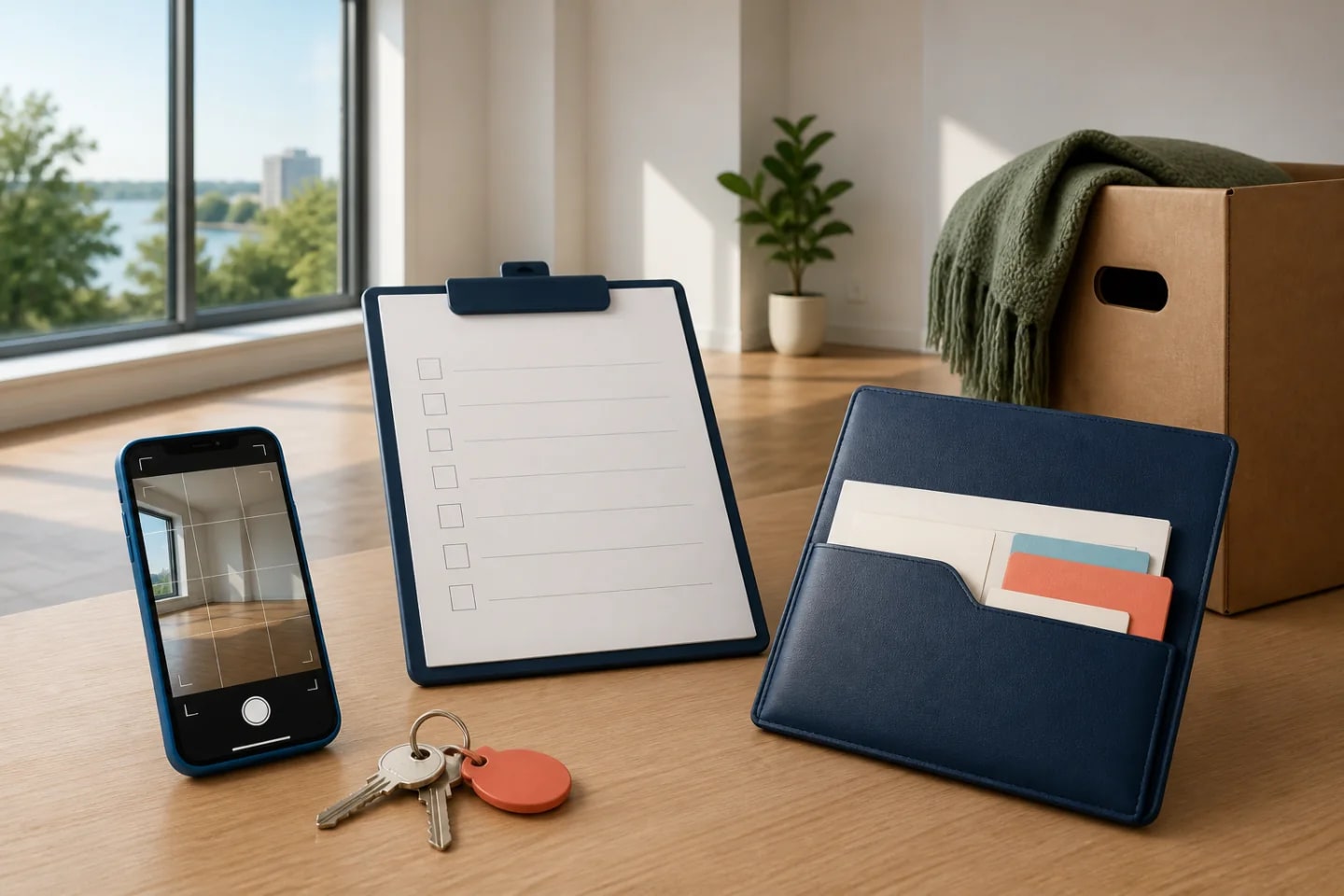
Photograph rooms and significant belongings, retain receipts or model information when useful, and keep a protected backup away from the rental. Do not upload an inventory, policy, receipt, or serial number to MoveIn.
- Capture wide room views.
- Add useful close views of significant items.
- Preserve originals and purchase records privately.
- Ask the insurer what documentation it recommends.
What a security deposit is
A security deposit is money held under the rental agreement to secure specified tenant obligations. It is different from rent, a utility deposit, an application fee, or a nonrefundable charge. The lease and applicable law determine how it is handled.
- Request an itemized move-in statement.
- Identify deposits separately from fees and rent.
- Keep the signed lease and each receipt.
- Save written communication about the deposit.
Document condition and communication
Before unpacking, use wide and close photographs or video to record existing conditions, complete the required inspection form, and report issues through the lease's authorized method. Photos can support a record but do not guarantee a deposit outcome.
- Preserve timestamped originals.
- Keep a copy of the submitted condition form.
- Request confirmation of receipt.
- Save maintenance correspondence throughout the tenancy.
Utility deposits are separate
Electric, water, or other providers may require a separate account deposit. Internet service can also involve equipment, installation, or activation charges. Requirements can depend on the provider, account history, existing-customer status, payment history, and applicable rules; confirm current terms directly and do not assume a dollar amount.
- Confirm the official provider.
- Ask whether a deposit or activation charge applies.
- Ask about written waiver and refund terms.
- Keep the provider receipt privately.
Florida-specific deposit information
For Florida rentals, the current text of section 83.49, Florida Statutes, and the Florida Department of Agriculture and Consumer Services consumer summary describe deposit handling and notice rules. These rules are separate from the general planning guidance above and can depend on the facts, current law, lease, and delivery of notice. Review the current official sources or obtain qualified legal advice for a specific dispute.